My role as a founder CTO: Year Eight
Read time: 16 minutes.
2025. What a year it has been. If a normal year as a startup founder already feels like four or five regular years, this one felt closer to a full decade. The pace of change in our industry has been wild. The concept of vibe coding is not even a year old. Apple was forced, for the first time, to allow external payment links in the US. Apps became easier to build than ever. Kids now want to become developers to drive lambos. There are courses promising millions if you learn to build apps, turning app development into what drop shipping was a few years ago. We were forced to quickly adapt and expand our definition of developer. We went from helping developers make more money, to helping apps make more money, and eventually to helping vibe coders make more money.
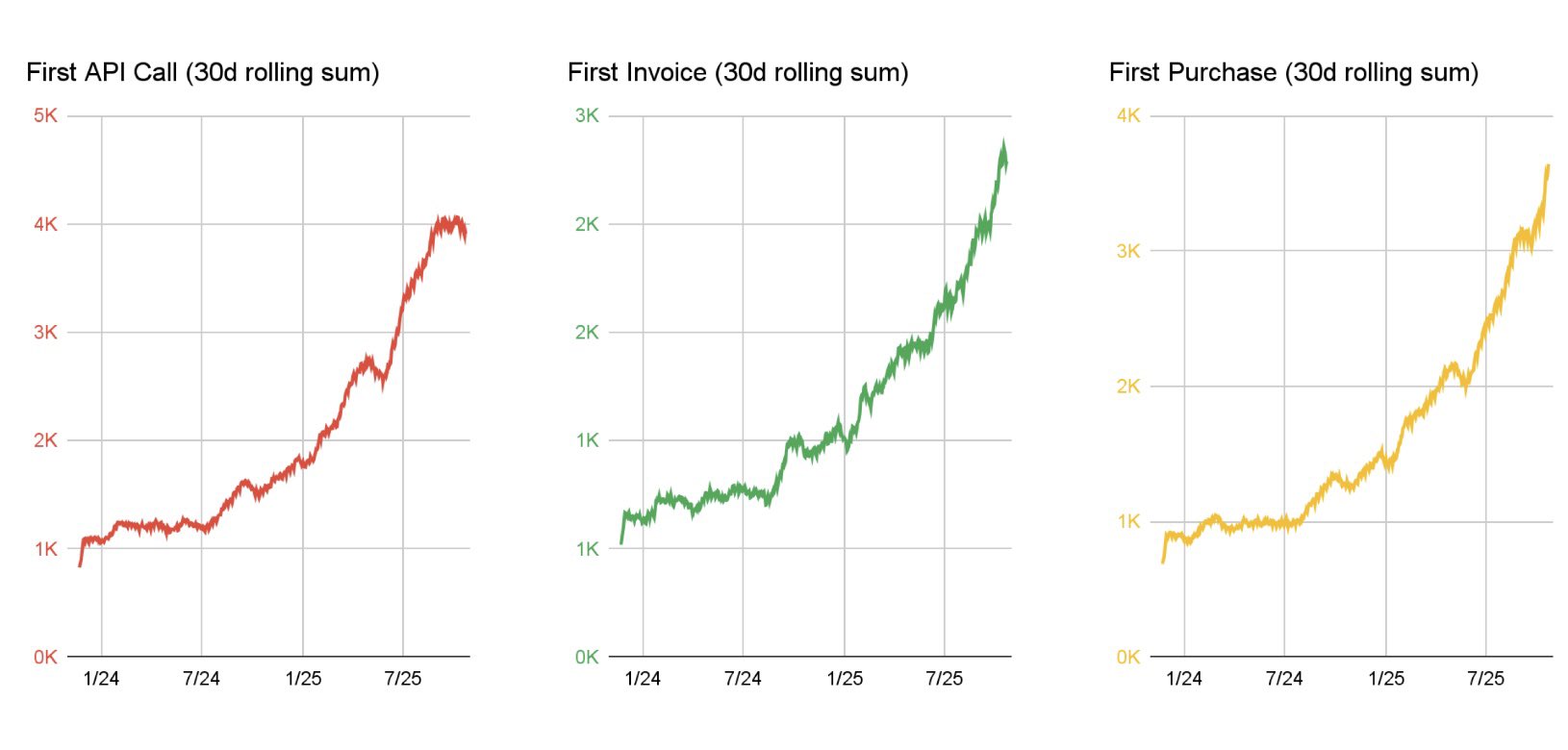
And in the middle of all of that, RevenueCat almost got acquired.
So please join me in another end of year reflection. Another year of learning how to build what we hope will become a generational company.
The elephant in the room
In last year’s blog post, I left out an important detail. In fact, it could have been the last post of this series. Towards the end of 2024, we received a serious offer to acquire RevenueCat.
This is the kind of thing that, as a founder, you dream about. You imagine it happening one day, but you never truly believe it will. Until it does. A large company that we deeply respected wanted to join forces with us. It was incredibly validating. The little toy my co-founder Jacob and I started years ago had grown into something people genuinely wanted. Not a VC inflated number on a slide, but a real, meaningful liquidity event.
To say that the weeks that followed were emotional and stressful would be an understatement. When the offer came, we were not in the best mindset. We were tired. Jacob had just broken his ankle and was dealing with both the physical pain and the mental toll of recovery. Everything felt heavier than usual.
Some days I would wake up convinced we should do it. Other days, absolutely certain we should not. To make things more interesting, Jacob and I were often out of sync, alternating between excitement and doubt. One of us would feel clarity while the other was full of hesitation.
We never started this company with the intention of selling it or doing a quick flip. But when serious offers come your way, you have a responsibility to consider them. This deal would have meant that I personally made nine figures. I do not know about you, but to me that is serious cheddar. It was an incredible outcome for the founders. Less so for some investors and the team.
Continuing independently
In the end, after considering everything, we decided not to sell.
At the time, we had something that was clearly working. It was getting good, and the opportunity ahead of us was massive. We had become a critical piece of the app economy. We had great users, strong momentum, and a world-class team that had taken years to recruit. And when you sell, you sell. No matter how the deal is structured, the company is no longer yours. The things that made it unique, the culture… everything will inevitably change.
Finding a way to go long
The real question became how to make this sustainable for us for another decade or more. We wrote down a list of the things that would make us quit. When we looked at it closely, we realized that most of them were either solvable with money or completely under our control. To me, it was mostly working only with people that inspire me (instead of those who drain my energy) and be sure that my family is taken care of. So we decided to raise another round. It included a meaningful secondary component, which helped de-risk the decision and removed a lot of second guessing. We told the whole team. And we kept building.
This is obviously a deeply personal decision, and every situation is different. One exercise that helped me a lot, beyond writing pros and cons, was reaching out to founders who had the opportunity to sell their companies but never did. People who kept going for decades.
We tend to celebrate exits publicly, even though many of them do not produce meaningful outcomes for founders or investors. And full respect to those who sell. Building a company is incredibly hard. But what we rarely celebrate are the people who keep pushing, year after year, building something enduring. One of those founders told me something that really stuck with me:
Surfing or doing whatever you enjoy for six months sounds great. But eventually you will get bored and want to build something else. What most people underestimate is how hard it is to build something that people actually want. It takes years of effort and alignment. I realized this company was my biggest asset, and its value was higher if I stuck around. So instead, I tried to find a place inside the company where I could still have fun.
I am a builder. And as exciting as traveling the world and surfing for six months sounded, I knew deep down I would be bored after two weeks.
Family support
Another crucial conversation was the one I had with my wife. She said,
“If you sell, that would be a little sad. This is yours and Jacob’s baby.”
I replied,
“But if we keep going, it means a lot more sacrifices for another ten plus years. More stress. More travel. More nights where I come home mentally drained.”
She thought about it for a moment and then said,
“That is the life we have known for the last ten years, and it has paid off. We are very proud of you and Jacob.”
You have to be a little bit crazy to happily walk away from the generational wealth this acquisition would have given our family. But she believes we can make this bigger and should keep pushing. She has put up with a lot over the years, and RevenueCat would not be where it is today without her support. Marry wisely if you want to build a generational company.
My role
This was, perhaps, the year where my role evolved the least. My day to day looked very similar to the year before, and so did my responsibilities. Have I finally turned into a real executive? Maybe. Who knows. The biggest difference is that I simply did more of everything. And I would like to believe I did it more efficiently and slightly better. The scale was bigger. The impact was bigger too.
I started the year with four simple goals:
- Ship a real app to the App Store using RevenueCat
- Travel more to San Francisco and spend more time networking with executives and founders
- Talk to at least one customer every single day
- Excercise at least 3 times a week
I am happy to report that I met them all.
Becoming a mascot
This was the year where I did the most external facing work in the history of the company. I traveled a lot in 2024, but this year I traveled even more. Jason Lemkin is right. You have to get on the jet. Fifty flights and forty five nights away from the kids. I attended multiple conferences, spoke at many of them, joined our Vibe Coding Catfes in New York City and Paris… And of course, our own conference, which has now grown into a week full of events. I also organized community meetups and spent a lot more time engaging with developers in person.
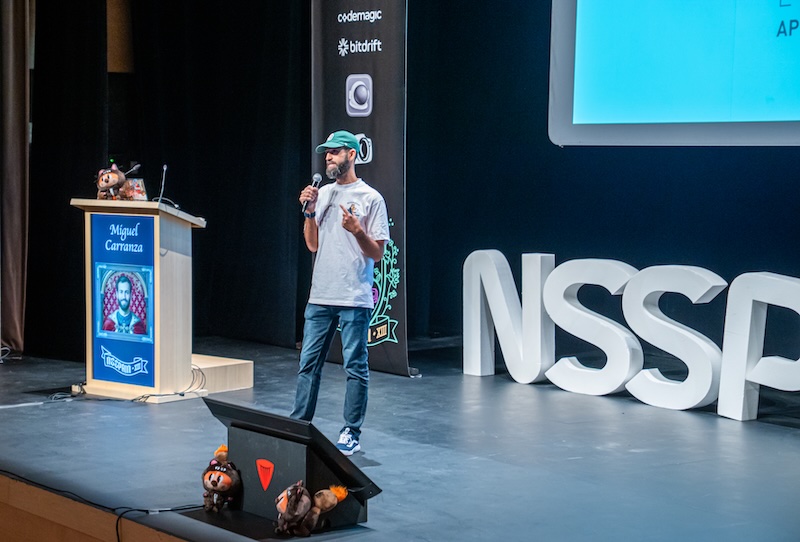
One thing I was very intentional about was making every trip count. Some events are great, others are a miss. Especially when flying up to San Francisco, I tried to make sure that every trip included at least a few high leverage moments. At a minimum, I tried to:
- Meet a local customer in person and learn about their frustrations and dreams
- Spend time face to face with at least one local team member
- Recruit someone we would love to work with, or meet a founder building something interesting
That approach made travel feel less random and much more productive. It turned conferences into an excuse to deepen relationships rather than the main event.
Another particularly fun highlight was acting as a judge at the largest hackathon in the world, organized by Bolt.
Hiring
Hiring will probably be my forever job, and without a doubt the highest leverage activity I can do for the company. I spent a significant amount of time reaching out to top candidates, having initial conversations, sharing the vision, and even flying out to try to close some of them in person. Founder interviews are still very much a thing. I did around forty of them this year. It is still manageable, and it still adds a lot of value. I am not thinking of killing that stage anytime soon.
I also used our new investors to help kick off another search for a potential VP of Engineering. In the end, it was unsuccessful. We did not strictly need one, but it would have given me more leverage. The bar for this role was extremely high. Good enough was… not good enough. This is probably the role with the highest impact at the company, and fixing a bad hire here could easily set us back six months or more. Eventually, I decided to stop the search. Instead, I focused on strengthening our existing engineering management bench and helping the leaders we already have continue to grow.
More recently, I have been working closely with our People Team to debug bottlenecks in our hiring process and improve how we operate. It is slow, sometimes frustrating work, but it compounds over time and pays off in quality.
Culture
Another thing that will probably always be part of my job is culture. We did a lot on that front this year. From writing a book that explains how we work, to aligning everyone at our yearly offsite, to launching a few memetic initiatives that spread across teams. These were meant to act as shared mental models, helping people make better decisions on their own.
A few of the most visible ones were:
- RCDA (RevenueCat Design Ascension): From the very beginning, RevenueCat prioritized API design and developer experience. Visual design, not so much. This year, we made a conscious effort to raise the bar. We wanted the product to look elegant, professional, and cohesive. This was about respecting our customers and matching the level of polish they expect from infrastructure they rely on.
- #top-21-customers: As we grow, we need to make sure our biggest customers get an exceptional experience and fast responses when something goes wrong. Ironically, in the past some free customers would get quicker replies just by tweeting at the founders. We put processes and automations in place so Engineering Managers and Product Managers would proactively prioritize issues and feature requests from our most critical customers.
- HVCMM (Help Vibe Coders Make More Money): The world is changing quickly, and we needed to make monetization radically simpler for less technical builders. This meant meeting people where they are. We built MCPs, fake stores for testing, and invested in partnerships with the largest vibe coding platforms. The goal was simple. Make it possible to monetize without needing deep technical knowledge.
- RCMaxxing: At some point during the year, it became clear that even our original hiring plan was not going to be enough to build everything we wanted. We needed to rally the entire company and push much harder on hiring. Faster. More aggressively. We stress tested our processes and went looking for bottlenecks. We failed to hit the numbers we were aiming for. But we learned a lot about where the process was breaking down, created much better awareness across the hiring managers.
- Ship or Die: We continued the tradition of explicitly calling out the initiatives that were existential to the company each quarter. Once identified, we made sure they were properly staffed, supported, and unblocked. This gave teams clarity and urgency, and helped us avoid spreading ourselves too thin.
As the company gets bigger, alignment does not happen by accident. It must be reinforced constantly.
Delegation
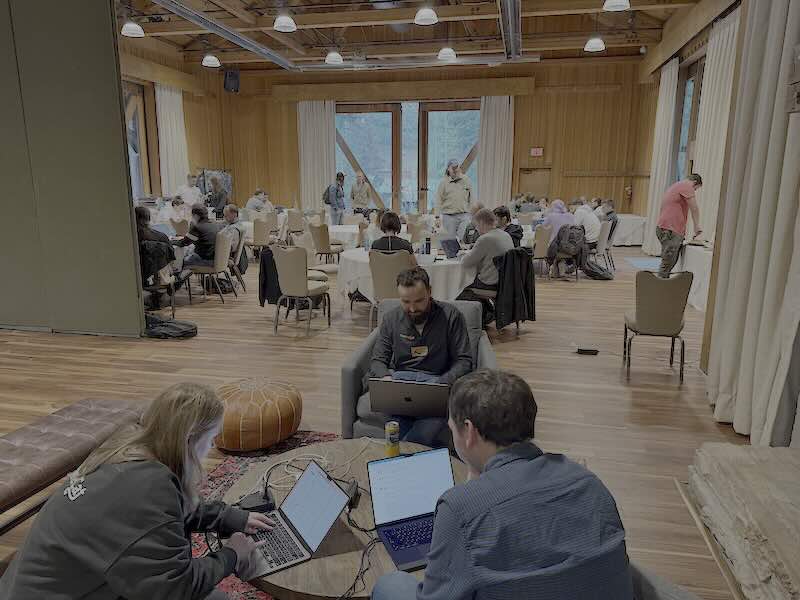
Not that I did anything particularly specific in this area, but years of building the organization, working closely with ICs, coaching managers, and stretching people over time led to a few moments this year that made me extremely proud of our engineering team:
- One of them happened when a US court forced Apple to allow external payment links. The team reaction was immediate. Everyone rallied to make the necessary product changes and to run experiments so we could understand the real impact on the ecosystem as quickly as possible. What made it even more special was the timing. It coincided with our yearly offsite, and I got to witness it in person. We dropped many of the planned activities. Teams locked in, worked across boundaries, and stayed up late figuring things out together. It was magical. The only way I can describe it is like attending a concert with backstage access. I was not helping get it out the door directly. My contribution had already happened years earlier, by building the foundation, recruiting the team, and designing the org that made this response possible.
- Another moment was how the team adopted AI coding tools. We were early, and we moved fast. And I am proud to say I had almost nothing to do with it. The team was curious and pragmatic. People shared tools, workflows, and learnings organically. Productivity increased, but without falling into hype or getting distracted. There was no need to push adoption, and thankfully no descent into extreme AI slop either. It played out exactly as I would have hoped.
- And finally, for the first time, I did not have to touch anything related to SOC 2 or compliance. This was also the year we achieved our best Vanta score and made significant improvements to our security practices.
Fires
As usual, there were many fires that escalated throughout the year. As we crossed the one hundred employee mark, it was also natural to see more friction between teams.
The two most painful fires happened early in the year, and were related to reliability incidents and support capacity. In both areas, we had clearly regressed, and I had to get personally involved. It was not pretty. There were hard conversations, some uncomfortable moments, and a lot of pressure while we worked through the issues.
That said, I am genuinely happy with where we landed. Things are better than they have ever been, and the alignment with the leaders in these areas is stronger than it has ever been.
Org changes
As I mentioned last year, reorgs are unavoidable. We needed to keep flexing that muscle, and we did it again this year. Some changes were bigger than others, but overall the process was faster, more efficient, and came with much less drama than in the past. One important difference this year was that Engineering Managers played a much heavier role. They were deeply involved in designing their own orgs, reallocating engineers, and putting together hiring plans. We still made some mistakes, but the process felt smoother and more mature.
OCTO
One of the bigger new initiatives I started this year was the Office of the CTO, or OCTO. Over time, we had become quite good at scaling existing teams and creating new ones by splitting them. What we were not as good at was building truly new green field bets. Zero to one work requires a very specific setup, and our existing structure was not optimized for it.
OCTO is a small team of staff+ level engineers who report directly to me. They all have a strong track record of doing zero to one work and a high level of trust across the organization. Their responsibilities include:
- Bootstrapping new bets by acting as the founding tech leads for net new initiatives outside our current product lines.
- Unblocking critical projects by embedding short term in teams that are facing difficult technical challenges or delivery delays, without changing reporting structures.
- Tackling high impact opportunistic work during downtime, such as cross functional tech debt, customer escalations, or internal improvements that would otherwise never make it to the roadmap.
They are also expected to hire a very small team when needed and do some light people management.
So far, the experiment has been working extremely well. Operationally, it is surprisingly simple. I meet with the group once a week for less than thirty minutes, and the meetings are fully agenda driven. It has been genuinely fun to watch these new products evolve, and some of them will be launching very soon.
Biggest mistakes
There were three big mistakes I made this year that, in hindsight are obvious.
Executive hiring took too much energy
Hiring is always hard and draining. Hiring executives is on a completely different level. I want to believe we learned and got better at it, but the truth is that I spent too much time and energy on the VP of Engineering search. What I was really looking for was leverage. In the end, I found that leverage by growing our senior managers and hiring new ones. I should have done those two things in parallel, instead of only after deciding to stop the search.
We let hiring velocity stall
Hiring velocity was strong in Q1, but at some point it slowed down significantly. There are always reasonable explanations. Assimilating new hires. Culture load. Half of the People team being on leave. But the reality is that we stopped, and we shouldn’t have. I noticed it, pushed a bit, and then moved on to something else. In retrospect, that was a mistake. This was the biggest fire, because it directly limited how much we could ship. We course corrected in Q4, but we still did not make all the hires we wanted to make.
We moved people too early
Related to the previous point, and to not tracking the state of Ship or Dies closely enough in Q3, we reassigned people to a new initiative too early. The project they were leaving behind was not stable yet, and fully abandoning it was not a smart move. We later had to reshuffle people again to make sure both projects kept moving. If we had hired faster, this would have been much easier and we could have avoided the friction of yet another mini reorg.
Random learnings
- If you hire enough great people, virality shows up naturally. Great people want to work with other great people. The response rate from cold outreach was surprisingly high simply because candidates already knew someone at RevenueCat they respected or wanted to work with.
- B players hire C players. But even strong A players can make mistakes and occasionally get fooled by B or C players. The only way to preserve talent density is to raise the bar after every hire. If you do not, the bar will slowly but inevitably drop.
- Every manager has defects, and that is completely normal. What is not reasonable is expecting their teams to be immune to those defects. If those patterns become existential problems, you have to address them directly. Work with the manager. Engage with the team. Bring in a peer for support. Or, if needed, change the management structure.
- I was very concerned about the growth in support tickets, especially with the rise of vibe coding and less technical builders. I expected a much sharper increase. What surprised me was the opposite. Vibe coders tend to open fewer support tickets. They are used to interacting with LLMs to solve problems on their own, often faster than traditional support loops.
- Tricking people into management by starting them in technical leadership roles has been a great hack for us to scale, especially with established teams. I expected most of the support to be around the hard parts like terminations or performance management, since those are the obvious challenges. What I underestimated was how much coaching is required to turn strong technical leaders into actual managers. Hiring, org design, and long term planning do not come naturally, and the transition needs to be very intentional.
- If there is no DRI, don’t expect it to get done.
- The concept of networking is mostly bullshit. Do not force it or meet people just for the sake of meeting people. Build great things instead, and the opportunities to meet truly interesting people will show up naturally.
Personal
On the personal side, I would say it was a good year. There were, of course, very stressful moments and a few real scares. Jacob’s injury. The massive us-east-1 outage. Still, overall my attitude was better and noticeably more optimistic.
For the first time, I can clearly see a version of the future where I keep doing this for a very, very long time. Maybe it is partly because any financial stress is completely off the table. Long are the days where adding an extra topping to a pizza could destabilize my finances. Now we can fly the grandparents out whenever they want, or whenever we need help. That kind of stability removes a huge amount of background noise from your life, even if you do not notice it immediately.
Training for a marathon had a much bigger impact on my mental state than I expected. I could clearly tell that on the days I did not excercise, I was a little grumpier. More importantly, it taught me that with enough time and consistent effort, you can achieve things that felt completely unrealistic. That alone made the sacrifice worth it, and I plan to keep exercising next year.
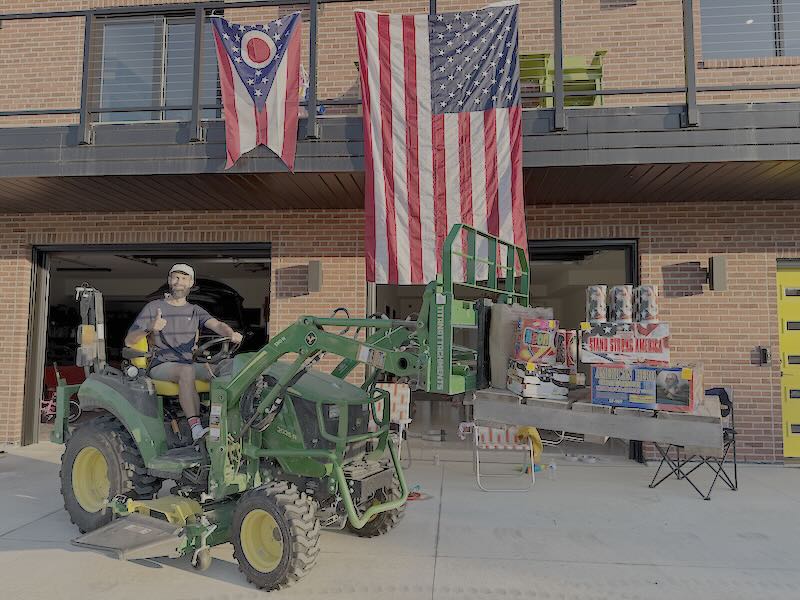
I also sent my company email every single week of the year. It turned into a great exercise in transparency and a surprisingly therapeutic form of forced reflection.
The biggest personal blocker was managing my energy levels. That was mostly driven by toddler induced sleep deprivation. It is one of those problems money cannot fix, and exercise only helps up to a point. Being mindful of it made a big difference. Giving myself some grace on bad sleep days, and doubling down when energy was high, noticeably improved both my mood and my productivity.
The future
So what is next for 2026? I see 2025 as a setup year. A lot of work went into laying foundations, aligning teams, and pushing initiatives close to the finish line. In 2026, many of those efforts should finally land. If things go well, the pieces will start coming together like an elegant puzzle.
It will also be the first year where RevenueCat truly becomes a multi product company. We will begin rolling out a new distributed backend architecture designed to remove single points of failure and give us real flexibility across regions and even clouds. I cannot wait to share more technical details once it is ready. I am fully convinced that the revenue goals will follow the products we ship, as they always have.
On my side, I will keep doing what I believe has the highest leverage. Continuing to hire a winning team. Spending more time making sure new managers are set up for success. Improving how we train and support leaders so we can keep scaling the organization without sacrificing our culture.
Of course, you never really know what will happen. The world is changing in strange and very fast ways. Maybe we will end up selling the company. That is always a possibility. But as of today, we are building for a massive opportunity. It is ours to lose.
This is the best time in history to be an app developer. Even better than when the iPhone was first announced. Anyone can build an app now, and we are breaking records for daily shipped apps almost every week. I feel energized and deeply committed to building the operating system for app developers.
Do more. Bigger. Better. More is more.
I am genuinely excited to see what the next eight years will look like.
I really hope you enjoyed reading this post. As always, my intention was to share it with complete honesty and transparency, avoiding the hype that often surrounds startups.
If you are facing similar challenges and want to connect and share experiences, please do not hesitate to reach out on Twitter or shoot me an email!
Special thanks to my co-founder Jacob and his wife Sarah, our Chief of Staff Susannah, our Engineering Managers, the whole RevenueCat team, and our valuable customers. I also need to express my eternal gratitude to all the CTOs and leaders who have been kind enough to share their experiences over these years. Shoutout to David Cramer, Damian Schenkelman, Dani Lopez, George Deglin, Peter Silberman, Alex Plugaru, Kwindla Hultman Kramer, João Batalha, Karri Saarinen, Miguel Martinez Triviño, Javi Santana, Matias Woloski, Tobias Balling, and Will Larson. Our investors and early believers Jason Lemkin, Anu Hariharan, Mark Fiorentino, Mark Goldberg, Andrew Maguire, Gustaf Alströmer, Sofia Dolfie, and Nico Wittenborn.
I want to convey my deep gratitude to my amazing wife, Marina, who has been my unwavering source of inspiration and support from the very beginning, and for blessing us with our two precious daughters. I cannot close this post without thanking my mom, who made countless sacrifices to mold me into the person I am today. I promise you will look down on us with pride the day we ring the bell in New York. I love you dearly.
Subscribe via RSS